Blog
Adding words to the dictionary

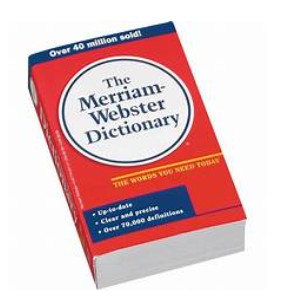
This year, 14,000 words were added to the Merriam-Webster English language dictionary. The dictionary already has about 470,000 entries.
Some of the new additions are vibe coding, looksmaxxing, parasocial, meme coin, Sunday scaries, cuffing season, yacht rock, Mandela Effect, superfood, and chili crisp. I don’t know what these words mean nor why we need them. But I thought that I’d like to come up with some new words that are deemed important enough that they are added to the dictionary and become part of everyone’s daily vocabulary.
Where do new words come from?
Sometimes words that are new to English are borrowed from another language. In fact, most English words are borrowed from other languages; over 50 languages in total. The word “orange” came from Sanskrit. The words quiet and integrity have Latin roots. Grammar and glamour have a Greek heritage.
Some new words are created by trimming an existing word. “Examination” was trimmed to give us “exam.” “Hamburger” was shortened to “burger.”
The meaning of some words changes gradually over time. “Bully” used to mean sweetheart. “Insult” used to mean brag. “Sad” used to mean satisfied.
New words can be created from scratch. Someone just made them up. For these words you cannot find the equivalent of a family tree. Words such as dog, donkey, surf, slouch, zit, jazz and freak were created by someone and then quickly adopted.
Since I want to make up new words, I will follow the approaches used by the great playwright, William Shakespeare. It is estimated that Shakespeare invented 1,700 to 2,200 words. Examples of the words he created include advertising, bloodstained, cold-blooded, epileptic, fashionable, hobnob, moonbeam, new-fangled, puking, swagger, worthless and zany.
To create new words, Shakespeare would change a noun into a verb, transform verbs into adjectives, add prefixes and suffixes to words, connect words that were not normally connected and make up a new word from scratch. Hence, I will create the following new words based on the noun “Glaser.”
Strategy 1 – change a noun into a verb. Glaser could become the basis of a verb that means crushing an opponent. For example, “He Glasered his rival.”
Strategy 2 – transform a verb into an adjective. Glasered could become an adjective that means a badly beaten opponent. For example, “His Glasered opponent gave up.”
Strategy 3 – connect words that are not normally connected. A new Glaser-based word could mean being invincible. For example, “That woman is a monster-Glaser.”
Strategy 4 – add a prefix or suffix to a word. A new Glaser-based word could describe the condition of an opponent after they were Glasered. For example, “He has been Glaserized.”
As you can see, Glaser (and its various extensions and uses) turns out to be a handy word and will be shortly making its way into the formal English language and your personal vocabulary.
As you can also see, I have settled on a tone of Glaser meaning crushing opponents. I could have had tones that were more loving or soothing, but I figured that that would be out of character.
When people hear words based on “Glaser” I’d like to have them respond with a dose of fear and trepidation. That’s a more accurate reflection of how people see me today.